Tuesday, November 24, 2026
From Sequences to Signals: What AI Changes in B2B Sales Outreach

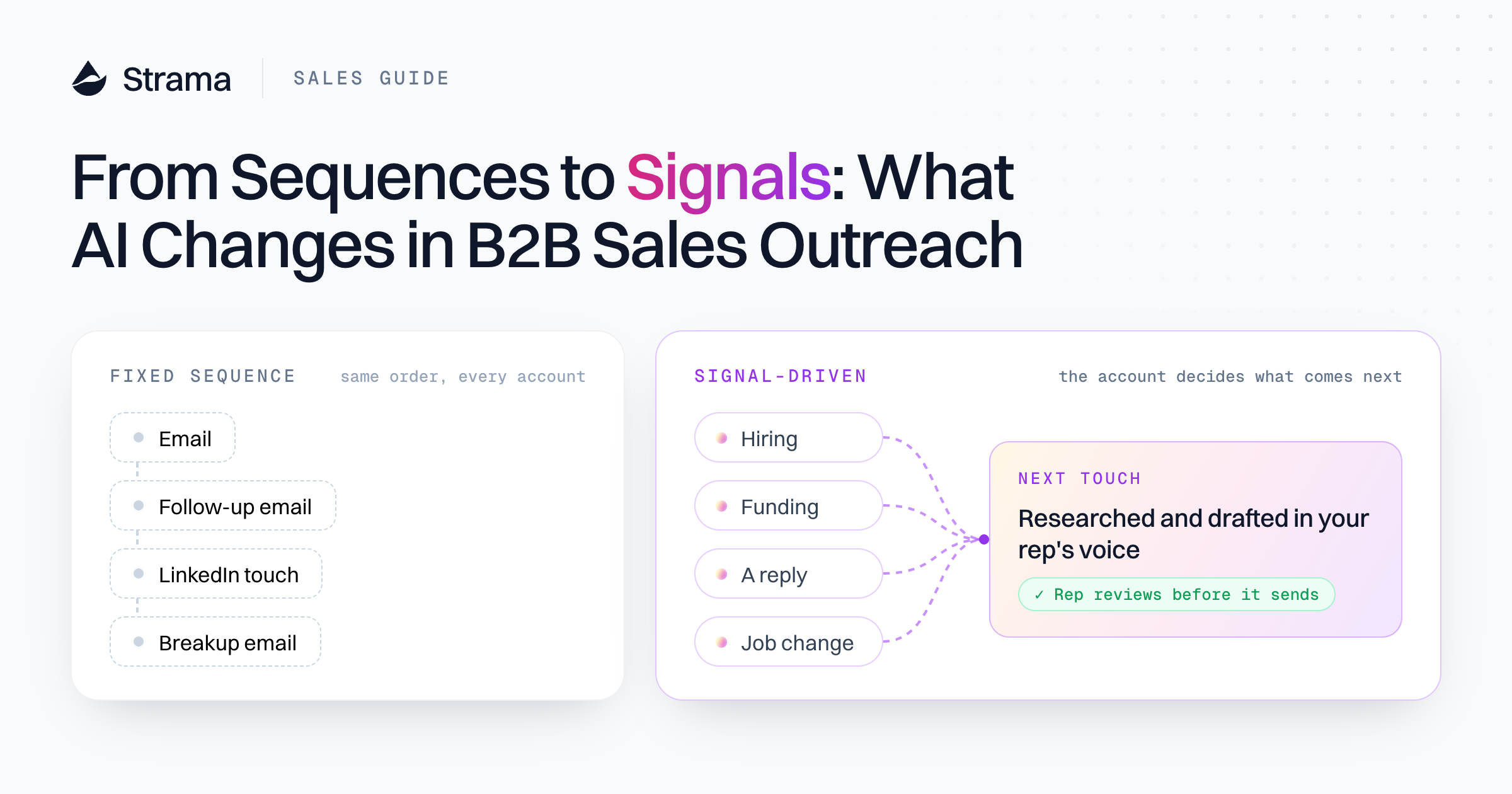
The Real Difference Is Not Faster Email
Are your SDRs spending their highest-value hours having sales conversations, or assembling lists, updating fields, and pushing prospects through sequences that no longer match reality? That question shows the practical difference between AI-driven sales outreach and traditional sales engagement tools.
Traditional engagement platforms brought needed structure to outbound: contact records, cadence steps, templates, task queues, and reporting. They are still useful for running repeatable follow-up. But their core operating model is largely static. A manager defines the audience and sequence; reps research accounts, select contacts, personalize messages, and manually decide when circumstances warrant a change.
AI-driven sales outreach changes the unit of work. Instead of only scheduling activities for a prebuilt list, it can help teams discover accounts, evaluate fit, interpret buying signals, generate context-aware messaging, and coordinate outreach across email, LinkedIn, and phone. The goal is to remove the low-value assembly work that keeps SDRs from using their judgment where it matters, while keeping that judgment in the loop.
For a sales development leader, the real question is whether the team has a workflow that keeps turning market context into relevant conversations.
Traditional tools organize execution
A conventional sales engagement tool is usually good at operational consistency. It helps teams build cadences, enforce call and email tasks, log touches, and monitor activity volume. This is valuable when the ICP is stable, the account list is already vetted, and messages require limited adaptation.
Traditional tools generally assume the hard decisions have already been made. Someone still needs to answer: Which accounts deserve attention? Which stakeholders are relevant now? What changed at the company? Is the contact worth another touch? What should the message say beyond a mail-merge variable?
When those answers live in spreadsheets, browser tabs, and individual rep intuition, scaling outreach often means scaling repetitive work.
AI-driven outreach connects decisions to execution
AI-powered sales outreach extends automation upstream and downstream. It can support lead sourcing, account qualification, research synthesis, personalized message creation, multi-channel orchestration, and learning from outcomes.
For example, an AI-driven workflow may identify accounts that match a defined ICP, score them against criteria such as company size, technology environment, hiring patterns, or strategic priorities, then create an outreach plan based on verified context. Signal monitoring makes this more timely: a leadership change, expansion, hiring activity, product launch, or other relevant event can prompt a rep to reassess an account instead of blindly advancing a cadence. This is the difference explored in signal-based AI prospecting: relevance improves when outreach responds to meaningful changes, not just calendar intervals.
Where the Operating Models Diverge
The most useful way to compare these categories is the work SDR teams do every day.
| The work | Traditional engagement tools | AI-driven outreach |
|---|---|---|
| Prospecting | Static lists from a CRM, database or CSV, researched by hand | Sourcing and qualification in one motion, with every account graded on fit |
| Personalization | Tokens, snippets and templates | Drafts built from account facts, role priorities and approved positioning |
| Rep workflow | The cadence says which task comes next | Research, next steps and drafts prepared for the rep to judge |
| Channels | Email, LinkedIn and call tasks can run disconnected | Each channel uses what the prospect has already seen |
| Measurement | Sends, opens, replies, calls and meetings | Results tied back to fit, signal, message angle, persona, channel and deliverability |
Prospecting: lists versus continuously qualified accounts
Traditional engagement tools typically ingest contacts from a CRM, database, or CSV. A rep may receive a static territory list and research each company manually before sequencing it. The quality of outreach is bounded by the quality and freshness of that initial list.
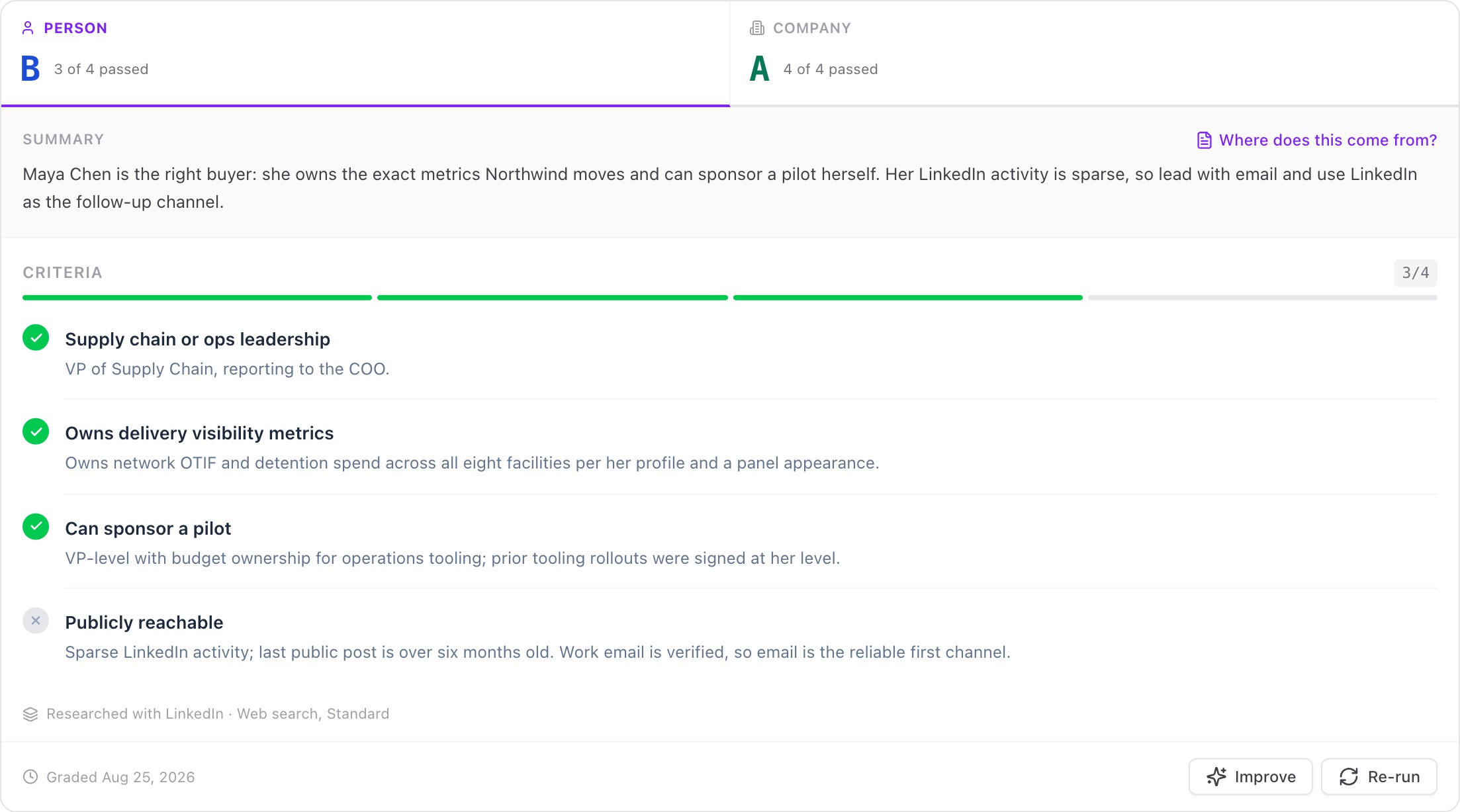
AI-driven systems can make sourcing and qualification part of the same motion. A tool such as Strama’s Lead Scout finds people who match a target persona and adds them straight into a campaign, without the export-and-import cycle. Each company and contact is then graded from A to F against its persona’s plain-language criteria, helping teams apply a consistent definition of “worth pursuing.”
That distinction matters because a large list is not a pipeline strategy. The most productive teams prioritize a smaller number of accounts with credible fit, a timely reason to engage, and a clear path to the buying committee. If a manager is trying to determine the best way to eliminate manual prospect research for sales development reps, the answer is a repeatable process that turns data into ranked, usable account decisions, not more data providers.
Personalization: variables versus informed relevance
Traditional tools support personalization tokens, snippets, and templates. These features save time, but they do not create relevance on their own. “I saw your company is growing” remains generic if it cannot explain why that growth creates a specific operational challenge or commercial opportunity.
AI can synthesize account facts, role priorities, past interactions, and approved positioning into a tailored first draft. Effective AI-driven personalization still cannot make unverified claims, and it needs clear guardrails: approved sources, defined ICPs, a consistent point of view, and human review for strategic accounts.
The result should be an outreach tool that doesn't sound like AI wrote it. The benchmark is whether the recipient can quickly see why the sender chose to contact them now, not whether the message feels clever. Teams should also avoid superficial triggers. As Strama explains in why generic funding congratulations emails fail, an event becomes useful only when it is connected to a plausible business implication.
Rep workflow: task completion versus guided judgment
In a traditional cadence, the system tells a rep to make call three, send email four, or connect on LinkedIn. The rep still has to decide whether the next activity makes sense.
An AI-powered sales agent can reduce that burden by preparing research, suggesting next steps, identifying missing stakeholders, drafting channel-appropriate messages, and surfacing changes that justify an intervention. This is especially relevant to how AI sales agents handle the parts of the SDR job that reps hate most: data cleanup, list building, repetitive research, call-note administration, and reformatting the same insight across several channels.
The best implementation leaves humans responsible for judgment, relationships, and exceptions. AI should recommend and accelerate; managers should establish policy; reps should validate sensitive claims and decide how to engage high-value accounts.
Channels: parallel activity versus coordinated engagement
Traditional systems may support email sequences and call tasks, but cross-channel experiences can become disconnected. A prospect who viewed a LinkedIn message, ignored two emails, and spoke briefly with a rep may still receive the next generic automated touch.
AI-driven outreach should use channel context to improve activity, not inflate it. A message on LinkedIn should not be a copied email. A call should reflect prior engagement. A follow-up should add a new idea, observation, or resource rather than repeat the first request.
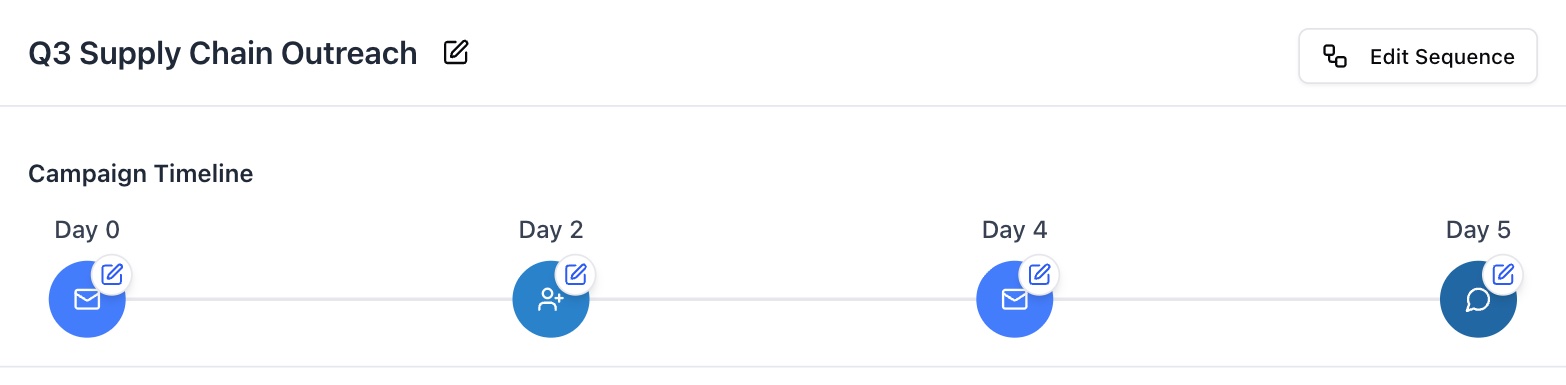
Strama runs email and LinkedIn as independent tracks in one sequence, puts call steps on a Call Sheet, and includes a built-in dialer that records and transcribes calls.
Infrastructure and measurement: activity reporting versus quality control
Both categories can report sends, opens, replies, calls, and meetings. AI-driven platforms can add more diagnostic value when they connect performance back to inputs: account fit, signal type, message angle, persona, channel sequence, and deliverability conditions.
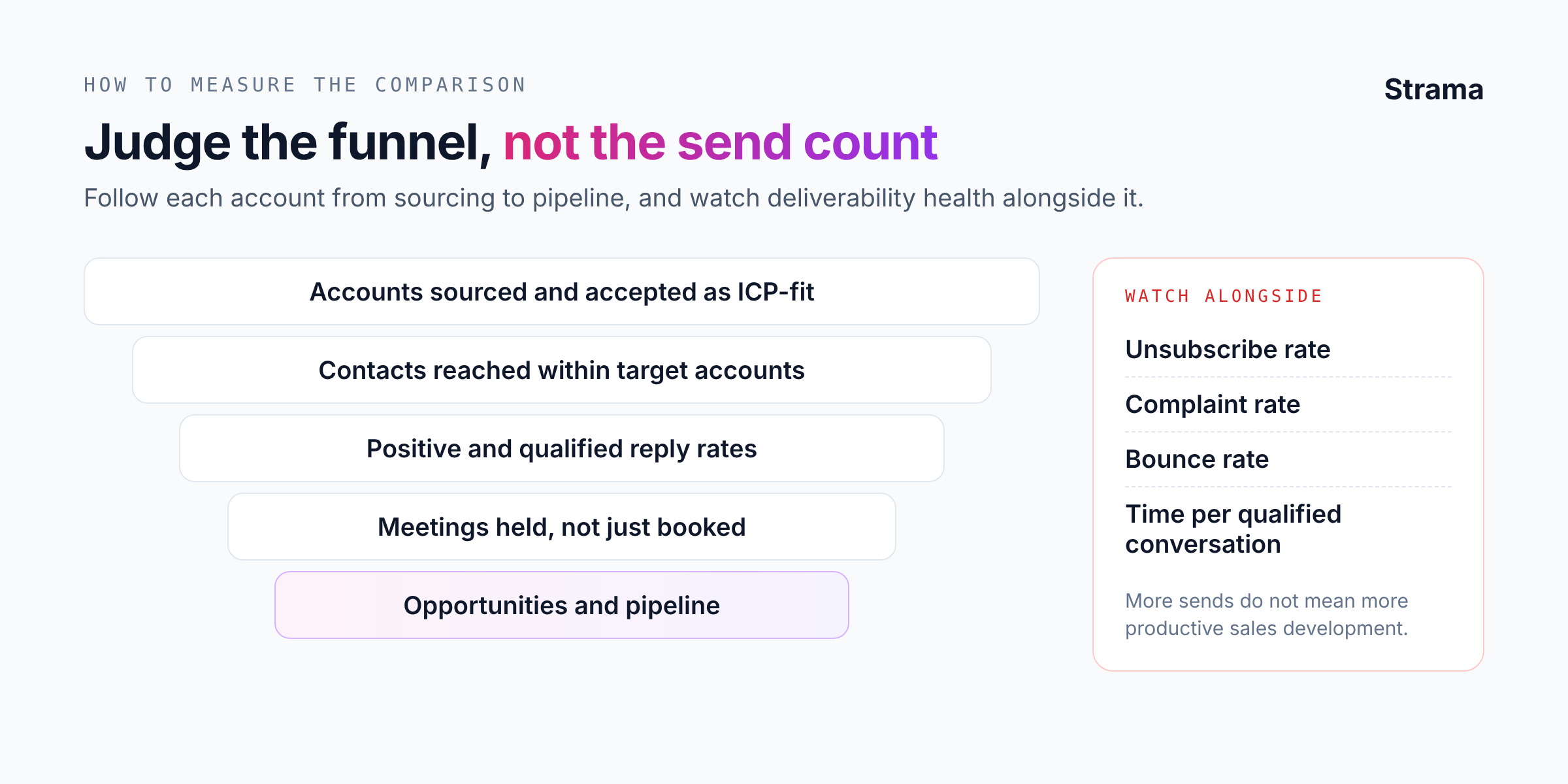
This matters because reply rate alone can mislead. A campaign can produce replies from poor-fit accounts, while a narrowly targeted campaign may generate fewer total responses but more qualified meetings. Evaluate performance through a funnel that includes:
- Accounts sourced and accepted as ICP-fit
- Contacts reached within target accounts
- Positive and qualified reply rates
- Meetings held, not just booked
- Opportunity creation and pipeline contribution
- Unsubscribe, complaint, and bounce rates
- Time spent per qualified conversation
Deliverability deserves equal attention. Dedicated sending infrastructure, warmed inboxes, and reputation monitoring affect whether even excellent messaging reaches the inbox. Many teams diagnose a copy problem when the constraint is technical; hidden outreach infrastructure problems can quietly undermine campaign performance.
What Sales Leaders Should Take From the Comparison
- Traditional sales engagement tools are strong at sequencing known contacts and standardizing rep follow-up; they depend heavily on people to supply research, prioritization, and message judgment.
- AI-driven sales outreach expands the workflow from execution into lead sourcing, account scoring, signal interpretation, personalization, and coordinated next-best actions.
- The quality advantage comes from better account selection and context, not from sending a higher volume of AI-generated messages.
- AI should work inside firm guardrails: approved data sources, defined fit criteria, voice standards, compliance rules, and review requirements for strategic accounts.
- Measure qualified pipeline outcomes and deliverability health alongside activity metrics. More sends do not necessarily mean more productive sales development.
- A unified process reduces the friction between finding a prospect and engaging them. Eliminating the list-building bottleneck is often the first practical gain teams notice.
Questions SDR Teams Ask Before Making the Shift
Is AI-driven sales outreach just automated email writing?
No. Email generation is one feature, but it is not the operating model. A mature approach combines account discovery, qualification, signal monitoring, messaging assistance, channel coordination, and performance analysis. Writing assistance without strong targeting just produces more irrelevant email, faster.
Can AI personalize outbound outreach without manual research?
It can cut a lot of manual research by collecting and structuring relevant account and contact context. But teams must define what “relevant” means for their market, validate claims, and give the system a clear messaging framework. The strongest workflows reserve rep review for high-value accounts and edge cases rather than requiring research from scratch for every prospect.
Will AI outreach make our messaging sound generic?
It can if the team relies on generic prompts and broad templates. To protect authenticity, establish a style guide based on real high-performing rep communication, approved product language, and specific examples of what to avoid. Strama’s Style Guide learns from the feedback notes reps leave on drafted messages, so the AI picks up the team’s voice instead of defaulting to bland, uniform copy. The human element still matters; likability in sales is not an automation problem.
Should we replace our existing sales engagement platform?
Not necessarily. The right decision depends on the gaps in your current workflow. If your team already has reliable data, well-defined segmentation, strong messaging, and manageable manual research, a traditional engagement platform may remain sufficient. If list building, qualification, personalization, and context switching are limiting throughput, an integrated AI-driven workflow may do more for the team than adding another point tool.
What is account planning in B2B sales, and where does AI help?
Account planning is the structured process of deciding which companies to pursue, why they fit, which stakeholders matter, what business priorities may create urgency, and how to coordinate engagement. AI can accelerate the research and organization involved, identify potential buying signals, and maintain account context. Sales leadership still owns the strategic choices: account tiering, value hypothesis, stakeholder map, and pursuit plan.
How should teams evaluate an AI sales automation company for ICP and targeting?
Start with the workflow, not the demo copy. Ask whether the platform can source the specific personas and companies you need, score accounts against your own fit criteria, show the evidence behind recommendations, and accommodate exclusions and compliance needs. Then test output quality on a representative account sample. A useful evaluation should include data accuracy, message grounding, deliverability controls, CRM compatibility, reporting, and the degree of human oversight available.
A Practical 30-Day Evaluation Plan
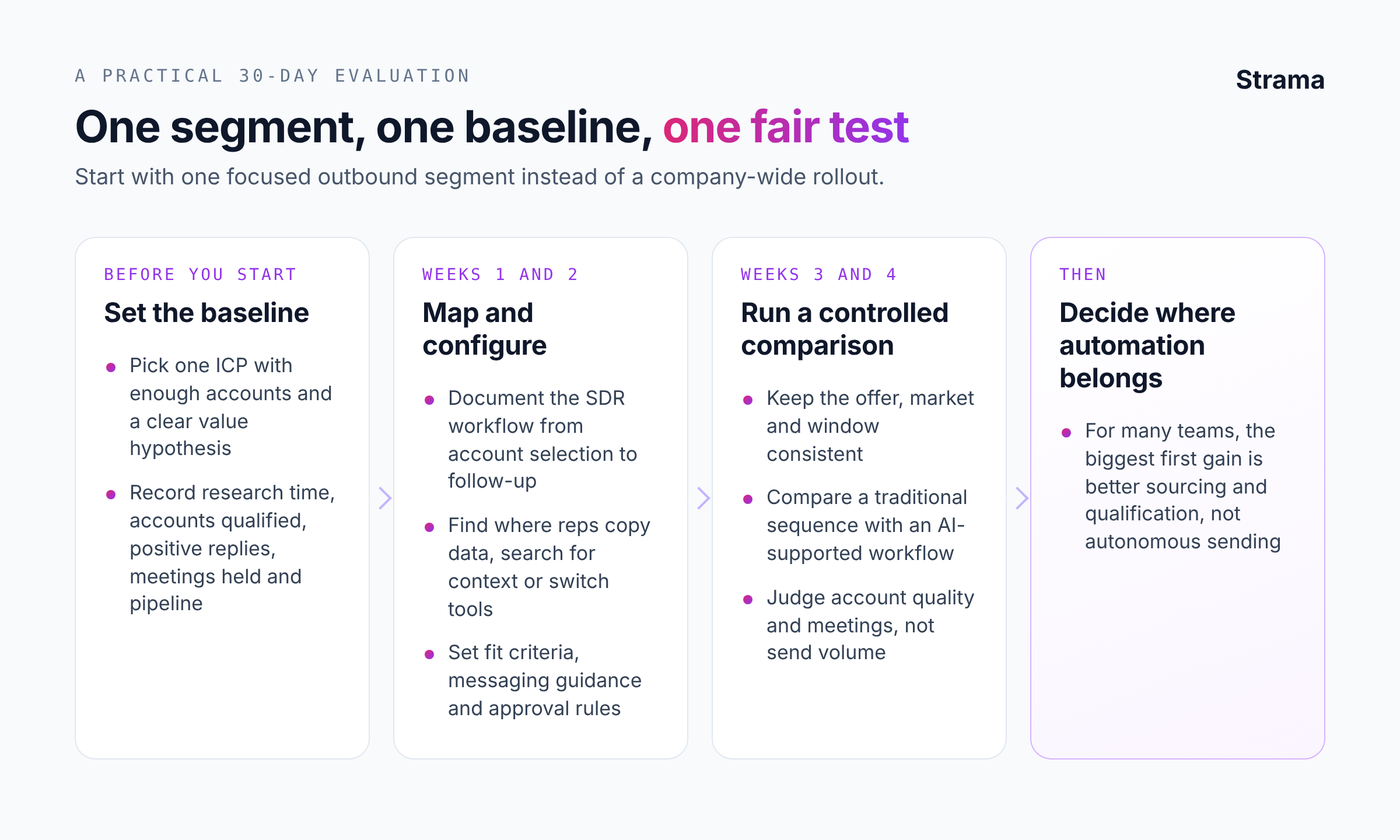
Start with one focused outbound segment rather than a company-wide rollout. Select an ICP with enough available accounts, a clear value hypothesis, and measurable conversion history. Establish a baseline for research time, accounts qualified, positive replies, meetings held, and pipeline created.
In the first two weeks, document the current SDR workflow from account selection to follow-up. Identify where reps copy data, search for context, switch tools, or perform repetitive administrative tasks. Then configure fit criteria, messaging guidance, and approval rules around those constraints.
During weeks three and four, run a controlled comparison. Keep the offer, target market, and measurement window as consistent as possible. Compare a traditional sequence against an AI-supported workflow on account quality, time to launch, personalization quality, qualified engagement, and downstream meeting outcomes, not just send volume.
Use the findings to decide where automation belongs. For many teams, the highest-impact starting point is better sourcing and qualification, not autonomous sending. Strama’s AI sales prospecting framework offers a useful lens for connecting account selection to outreach execution.
How Strama Ties Research to the Next Touch
In Strama, the research that decides whether an account is worth pursuing is the same research the outreach is written from. Each company and contact is graded from A to F against its persona’s plain-language criteria, and the grade, the reasoning for each criterion and the cited research behind it sit on the lead’s Intelligence tab. Generation draws on that research, your content library and your style guide, and claims in the drafts are checked against the sources (where research comes from).
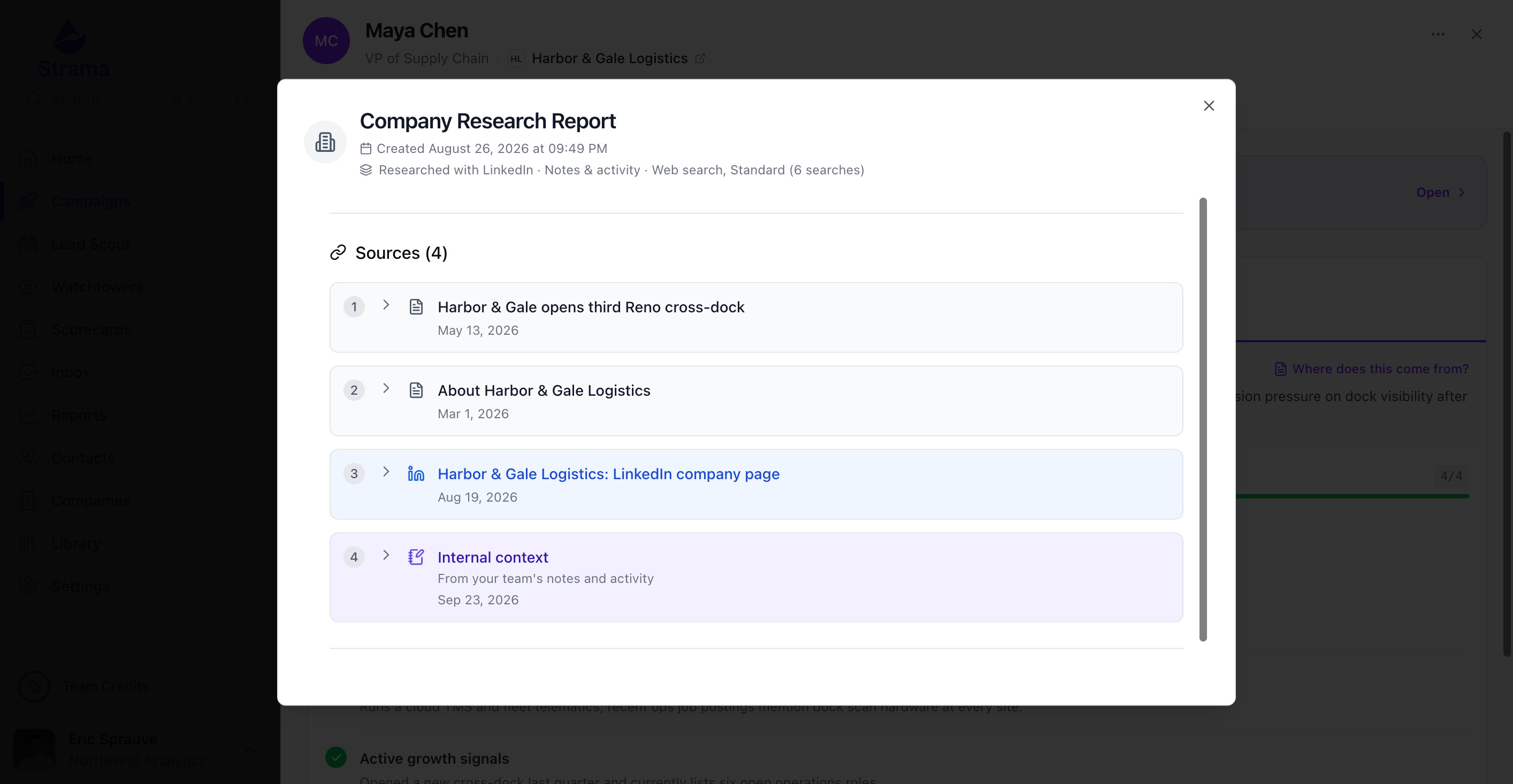
The rep stays in charge of what goes out. Every sequence is a draft that sends nothing until a rep starts it. Email and LinkedIn run as independent tracks, and a reply stops the sequence and lands in one Inbox. Speck Design grew pipeline about 50% in its first month on Strama (the Speck Design story).

Better Outreach Starts Before the First Message
AI-driven sales outreach is only better when it helps SDR teams identify the right accounts, understand why those accounts may care, communicate in a credible voice, and respond intelligently as circumstances change. Traditional sales engagement tools provide structure for activity. AI-driven systems can add the context and decision support needed to make that activity more valuable. The winning model is disciplined automation: let technology handle repeatable research and coordination, while giving salespeople more time to exercise the judgment that earns trust and creates pipeline.