Tuesday, October 13, 2026
How MonetizeNow Doubled Meetings Booked with One Founding SDR on Strama

"We're going wide with it, we're going deep with it."
Kam, Founding SDR, MonetizeNow
Most lean sales teams end up choosing between reach and relevance, and between building pipeline and reacting to the buyers who show up on their own. At MonetizeNow, where one founding SDR runs outbound for himself, the CEO and the head of sales, Strama has taken that choice off the table.
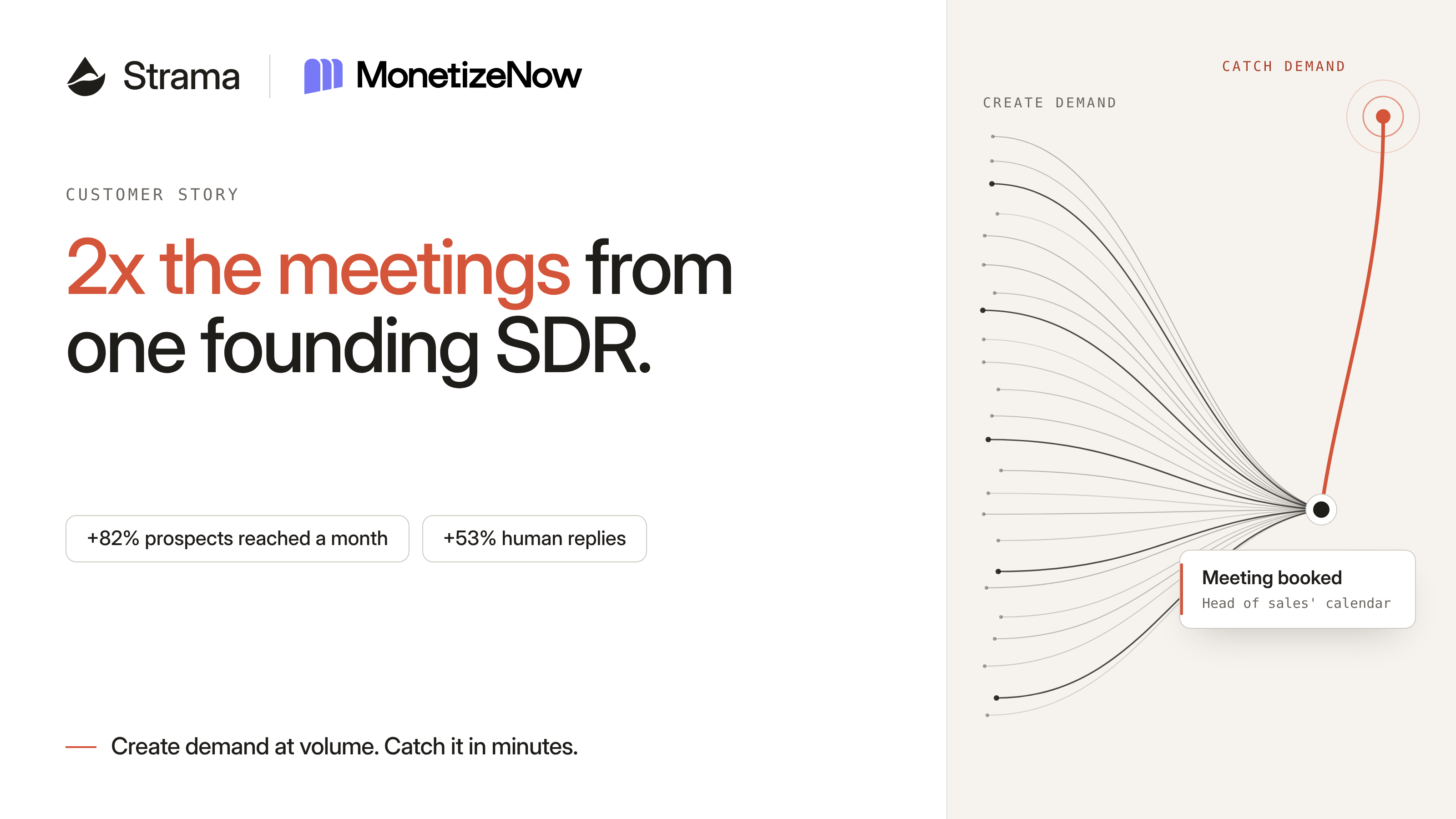
2x
meetings booked
+82%
new prospects reached per month, team-wide
+53%
human replies per month
+71%
reach on the founding SDR's own seat
A founding SDR and a market too big to hand-pick
MonetizeNow sells a CPQ and monetization platform to B2B software companies, and Kam, its founding SDR, owns outbound for the whole company. His job is to put relevant outreach in front of the right prospects at volume, across several senders and without a big team behind him, which means guarding against two failures at once: generic outreach that burns through a small market, and slow follow-up that lets warm buyers go cold. He answers the first by creating demand at volume and the second by catching it within minutes.
Create demand: wide and deep, without going generic
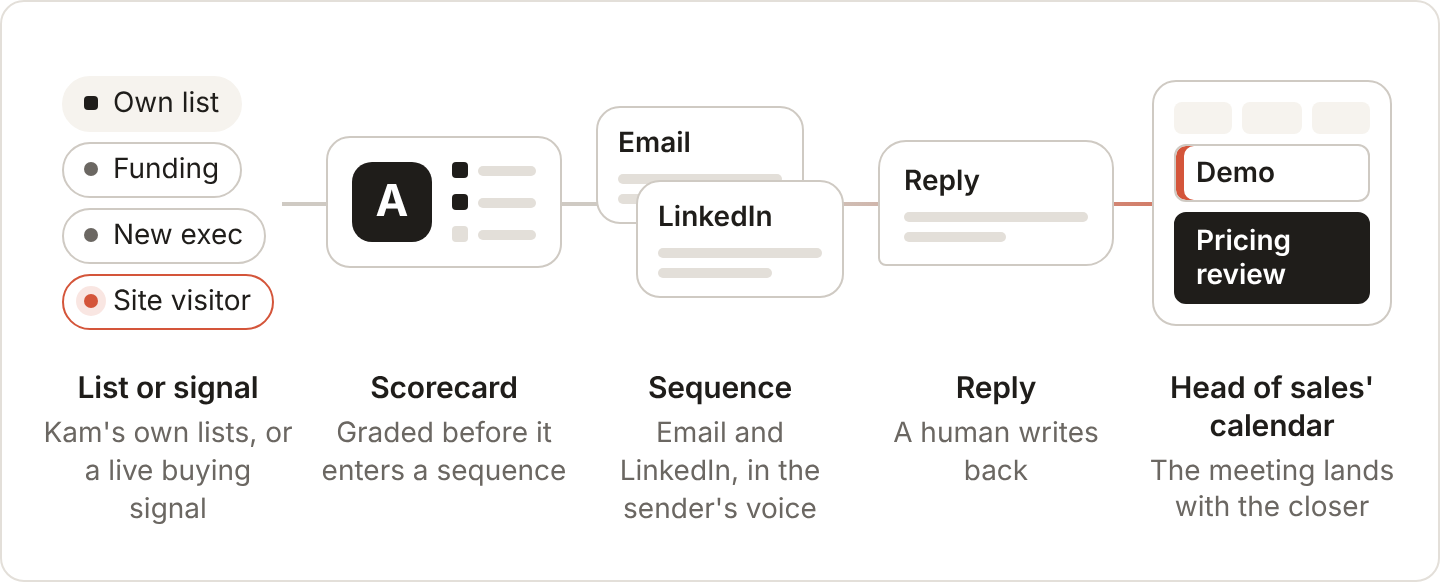
Who he reaches. One person can't hand-pick every account and still cover a market, so Kam builds his own lists and runs them by the hundreds while Strama does the research and drafting behind them. He also can't afford to spend a week on the wrong list, so every prospect is graded against a scorecard before it enters a sequence, which tells Kam where to spend his effort before he writes a word. His reaction the first time he saw those grades:
"I see gold."
What he sends. When every prospect is a stranger, the email has to be about their business, and Kam is direct about what makes one land:
"Don't just try to sell me the sale... What about my product? How can you help me? How can you help our use case?"
Strama researches each account so the message can speak to the prospect's product and use case, and when a draft misses, Kam tells it what to change and how, with specific notes, so the rewrite still sounds like him.
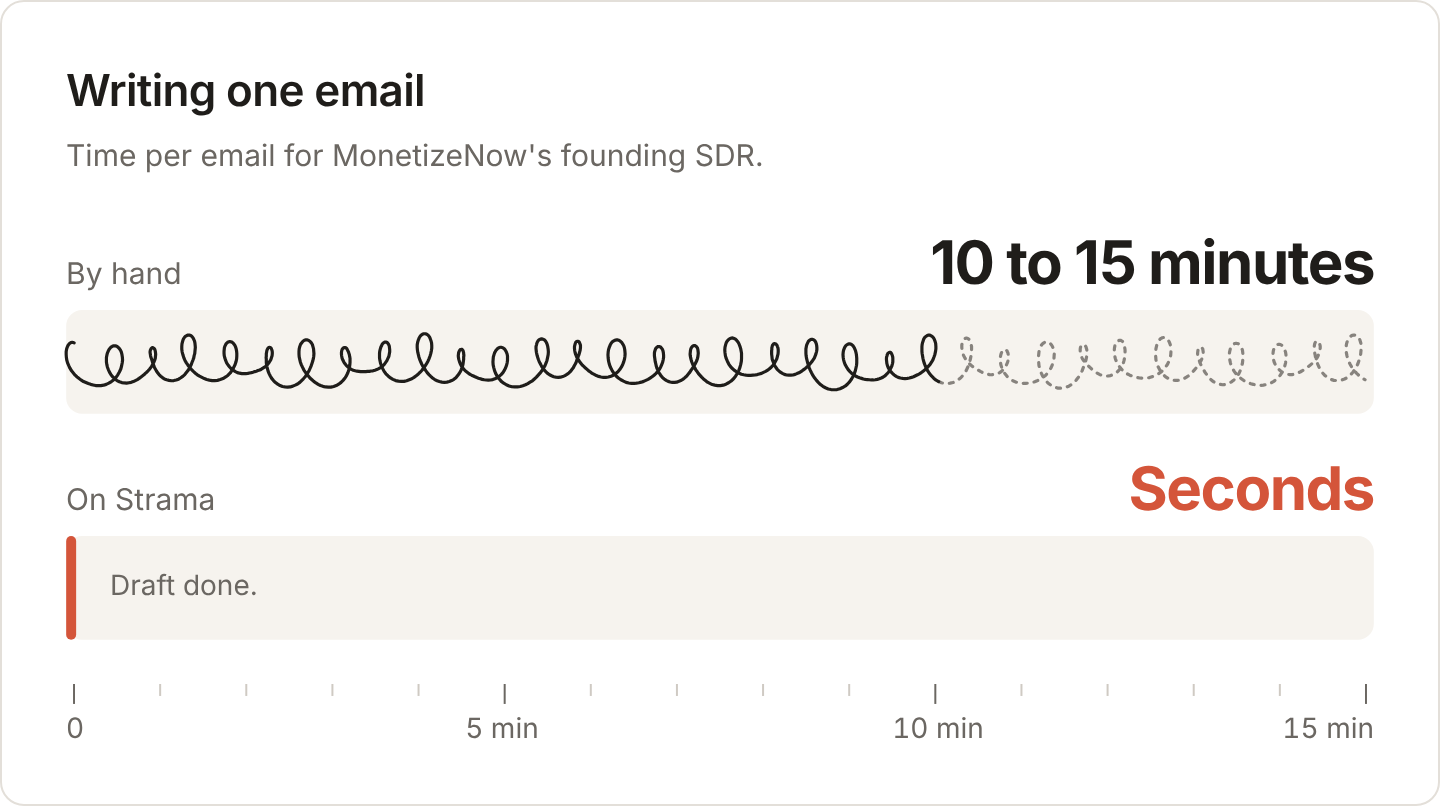
How fast. An email that used to take Kam 10 or 15 minutes to write by hand now takes Strama seconds, and across his own outreach and the sequences he runs for the CEO and the head of sales, that time adds up quickly. His hours go into building lists and answering replies instead of drafting.
Catch demand: a buyer on your site is warm for minutes
Kam's lists start conversations on his schedule, but some buyers start them on their own, and being ready for those is the other half of the job. He runs campaigns built around live buying signals, including recent funding, executive role changes and visitors to MonetizeNow's own website, because a buyer on your site stays warm for only a few minutes and most lean teams don't have the hands to follow up that fast.
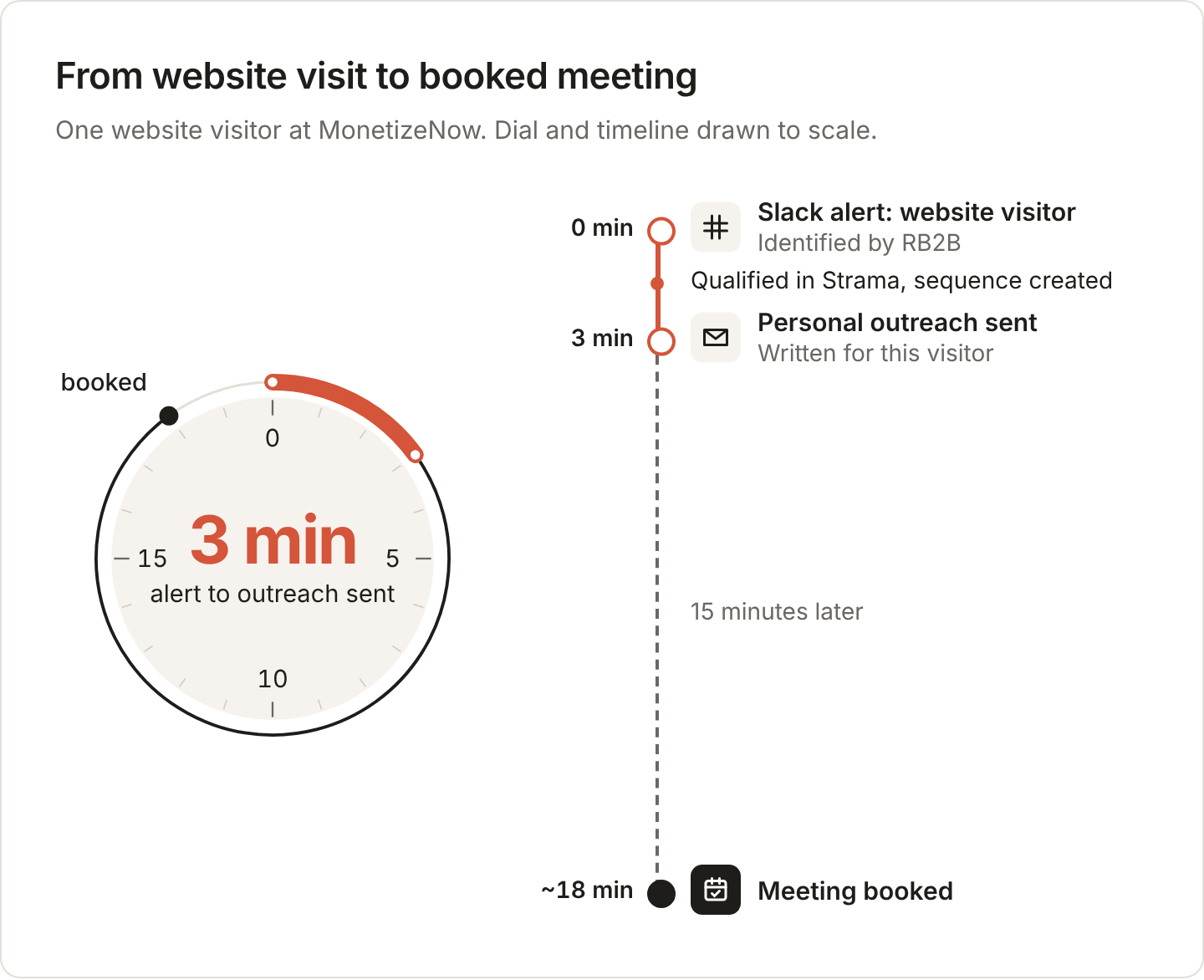
In one case, a Slack alert flagged a visitor on MonetizeNow's website, identified through RB2B. Kam opened the RB2B campaign in Strama, qualified the visitor, created a sequence and sent personal outreach within three minutes, and the prospect booked a meeting 15 minutes later. That only worked because the signal, the research, the scoring and the draft were already in one place, so Kam could reach the visitor inside that window with outreach written for them.
What changed: 2x the meetings, more reach, more replies
That alert is one story, and the same motion shows up across the team's numbers. MonetizeNow now books 2x the meetings, reaches 82% more new prospects each month and gets 53% more human replies, which for a team short on headcount means more of the market covered and more conversations started.
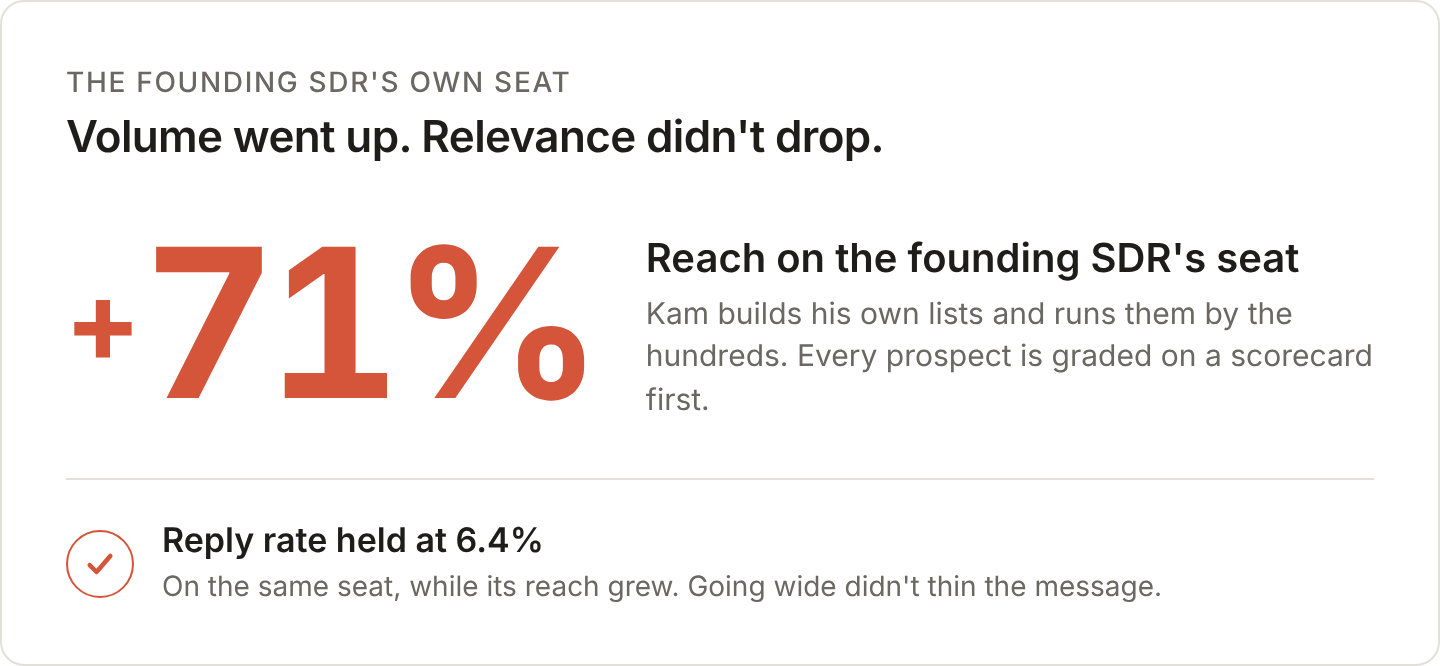
On Kam's own seat, reach grew 71% while the reply rate held at 6.4%. That matters because going wide usually costs relevance, and with scoring before sending and research behind every email, his replies held steady as his list grew.
Outbound for the whole GTM team
Those results don't come from one seat alone. Strama is MonetizeNow's primary cold outbound channel across four sender seats, including the CEO's and the head of sales', with Kam owning the motion and filling the pipeline for the people who close it. Several accounts first worked in Strama now show up on the head of sales' calendar as demos and pricing reviews, and one CFO, writing about a deal that started this way, credited the first message:
"Your outreach and excellent email opener, you made this deal happen."
CFO
That is where the effort pays off for a team this size: the first message that earns a buyer's attention.
Three lessons for lean outbound teams
- Create and catch. Kam builds pipeline at volume and reacts to signals within minutes from the same place, so put your lists and your signal alerts in one tool.
- Reach and relevance can grow together. When research and scoring do the heavy lifting, you can widen the list without thinning the message, as long as every list is graded against a scorecard before anything gets sent.
- Direct your tool. A tool you can steer keeps your voice on every message, so brief it the way you would brief a new rep and tell it what to change when a draft misses.
Going wide and going deep
MonetizeNow started where most lean teams do, choosing between reach and relevance and between building pipeline and reacting to it. On Strama, Kam stopped having to choose, because he builds lists by the hundreds, keeps every message specific to the account and still answers a website visitor within three minutes, which is what he means by going wide and going deep.
If you want to see how the same motion would run on your own account list and signals, book a time with Strama.